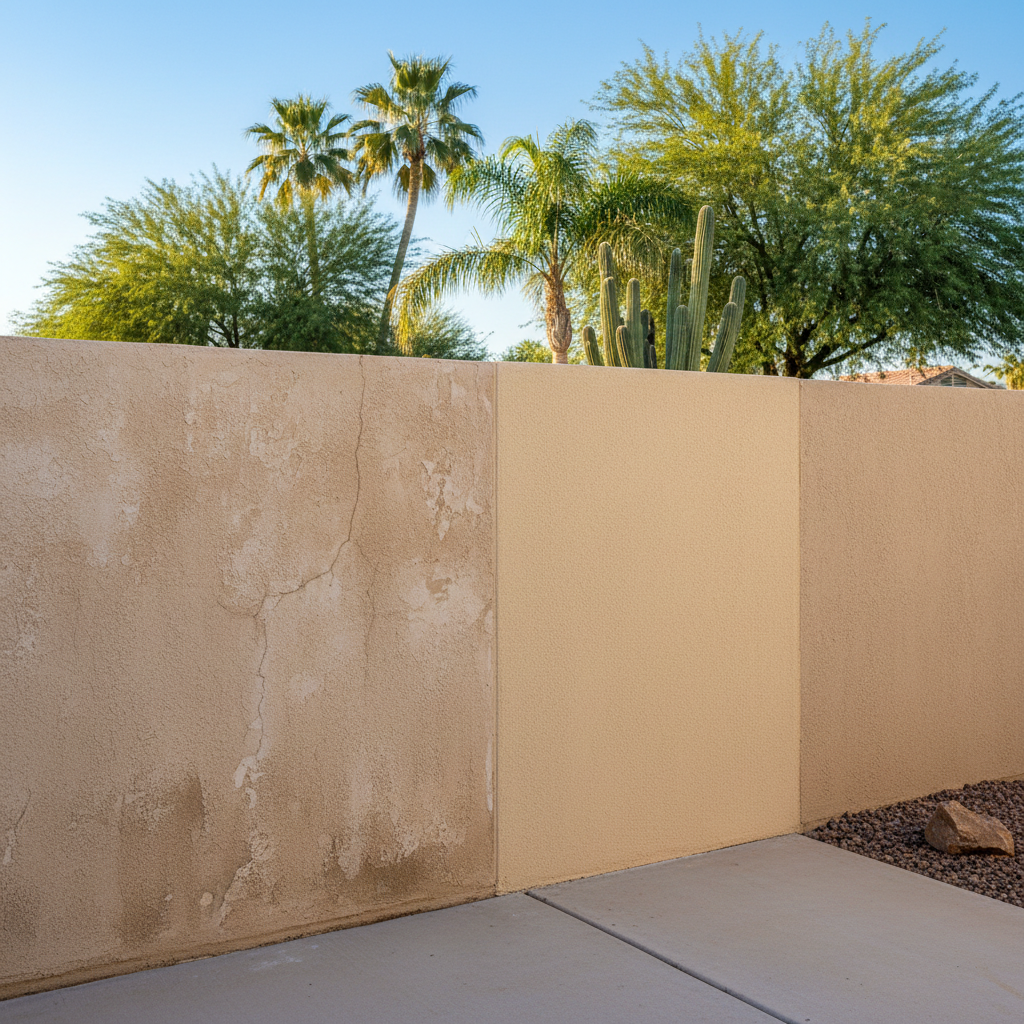
Alright, let's talk stucco replacement. If you own a home here in Phoenix, you already know our sun and heat can be brutal on exterior finishes. Eventually, that stucco will need more than just a patch job. When that time comes, you're usually looking at two main routes: a complete tear-off and re-stucco, or an overcladding approach. I see folks wrestling with this decision all the time, so let's lay out the pros and cons of each.
Full Stucco Tear-Off: The Gold Standard
This is exactly what it sounds like, really. We strip everything down to the sheathing – sometimes even further, depending on what we find underneath. It's a big job, no doubt about it, but it's often the best long-term solution.
The Good Stuff:
- Total Reset: You get a clean slate. We can inspect the underlying wall structure for any hidden water damage, rot, or termite issues that might be lurking. This is huge, especially on older homes in neighborhoods like Arcadia or Central Phoenix where original construction methods might not have been as good at handling our monsoon rains.
- Better Moisture Management: With a full tear-off, we can put in a brand-new, modern weather resistive barrier (WRB) system. This is super important for stopping moisture from getting in, which is the number one enemy of any wall system, even here in our dry climate.
- Longest Lifespan: Because you're starting fresh with all new materials and proper layering, a full tear-off stucco job is going to give your exterior the longest possible lifespan. You're investing in decades of durability.
- Best Appearance: You get a completely new, uniform finish. No worries about adding too much thickness or messing with the look of architectural details.
The Not-So-Good Stuff:
- Cost: Yeah, it's going to be more expensive upfront. More labor, more material to remove, more waste to get rid of. There's just no getting around that.
- Time & Disruption: It takes longer. Your home will be a construction zone for a bit, and there's more noise and dust involved.
Overcladding Stucco: The Overlay Option
Overcladding, sometimes called re-stuccoing over existing stucco, means applying a new layer of stucco directly over your old, but stable, stucco. It's an appealing option for some, but it comes with some serious warnings.
The Good Stuff:
- Lower Upfront Cost: Generally, this is cheaper because you're not paying for demolition and getting rid of the old stucco. Less labor, less fuss.
- Faster Project: Since there's no tear-off, the project usually moves quicker. Less disruption to your daily life.
- Less Mess: No demo means less dust and debris around your property.
The Not-So-Good Stuff:
- Hidden Problems Stay Hidden: This is the biggest risk, honestly. If there's any moisture damage, wood rot, or structural issues behind your old stucco, overcladding just seals those problems in. They'll keep getting worse, and you won't know until it's a much bigger, more expensive repair down the line. I've seen this happen too many times, especially with homes that have had chronic leaks around windows or rooflines.
- Added Weight & Thickness: You're adding another layer of heavy material to your walls. While usually not a structural concern on its own, it can sometimes affect window and door trim, and even make future repairs more complicated.
- Shorter Lifespan: You're building on an existing, aging surface. The new stucco is only as good as what's underneath it. Its lifespan will likely be shorter than a full tear-off.
- Potential for Cracking: If the original stucco has significant cracking or movement, those issues can show through to your new layer over time, even with proper preparation.
My Recommendation for Phoenix Homeowners
Look, I'm not going to beat around the bush. For most Phoenix homes, especially if your stucco is showing significant signs of age, cracking, or water intrusion, I almost always recommend a full stucco tear-off and re-stucco. Yes, it's a bigger investment upfront, but it's the only way to truly address any hidden issues, upgrade your moisture barrier, and make sure your home is protected for the long haul.
Think of it like this: would you just paint over a rusty car body and call it good? Or would you strip it down, fix the rust, and then paint? Your home's exterior is its first line of defense against our harsh desert environment. You want that defense to be as strong as possible.
Overcladding can be a viable option in very specific, limited circumstances – maybe if your existing stucco is in near-perfect condition but you just want a fresh color, and you're absolutely certain there are no underlying issues. But even then, I'd proceed with extreme caution and a thorough inspection.
At Integrity Stucco, we believe in doing the job right the first time. We'll always give you an honest assessment of your stucco's condition and help you understand all your options, so you can make the best decision for your home and your budget.