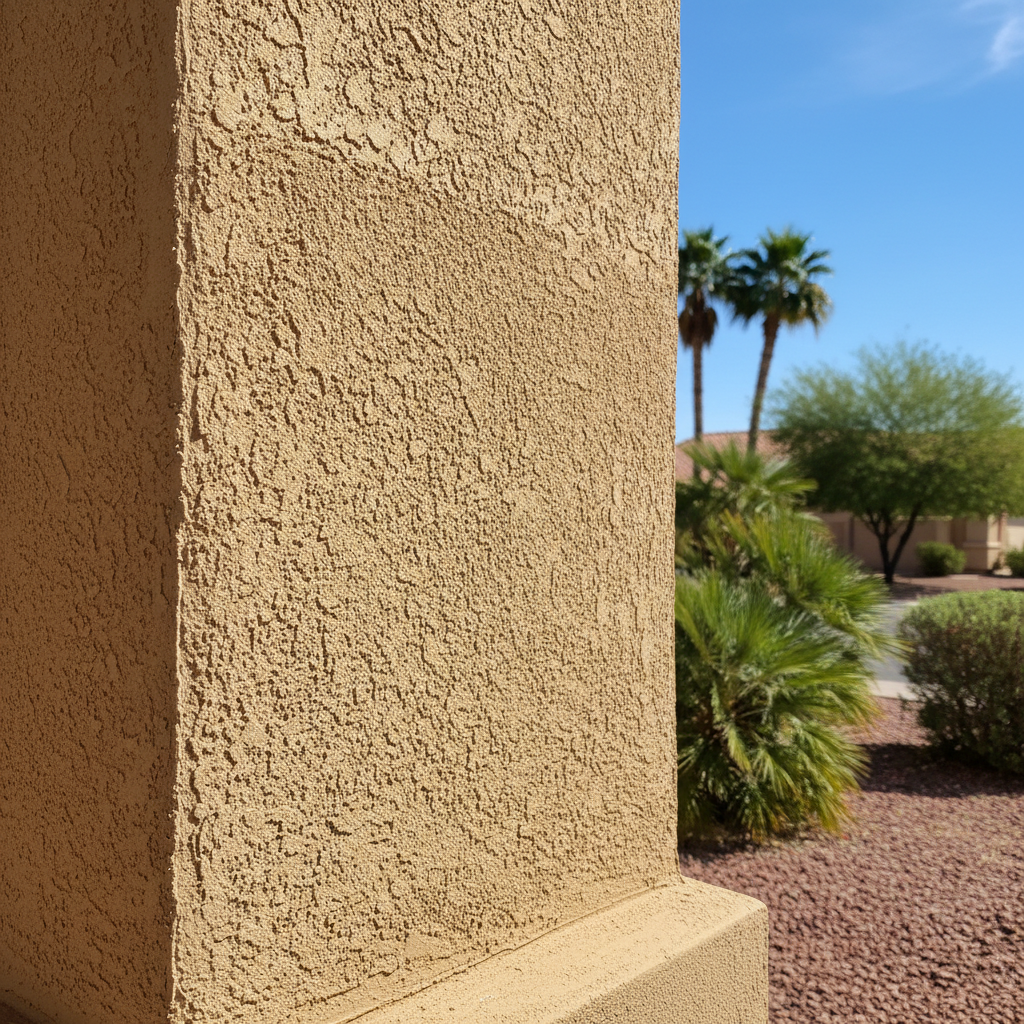
What causes stucco to crack in Phoenix?
You'd think stucco, being so tough, wouldn't crack much, but it does. Here in Phoenix, a big culprit is our extreme temperature swings. We go from scorching 115-degree summer days to 40-degree nights in winter, and that constant expansion and contraction puts a lot of stress on materials. It's like your house is breathing, and stucco moves with it. Then there's soil movement – a lot of our homes, especially in older areas or where there's expansive clay soil, can settle a bit, causing stress cracks. Water damage is another huge one; if you've got a leaky roof or an irrigation head spraying directly onto your wall, that moisture can get behind the stucco, freeze (rarely, but it happens in winter), or just weaken the substrate, leading to cracks and delamination. Poor installation, believe it or not, is also a factor. If the lath wasn't installed right or the mix wasn't proper, you'll see issues sooner rather than later.
How do I know if a crack is serious or just cosmetic?
This is a question I get all the time. Most small hairline cracks, especially around windows or doors, are often just cosmetic. They're usually from minor settling or temperature changes. You can often patch these yourself with a good quality caulk or a small stucco patch kit. But if you see cracks that are wider than a credit card, or if they're running diagonally from corners of openings, or if they're in a spiderweb pattern, you need to pay attention. Those can indicate structural movement or significant water intrusion. If you can stick a dime into a crack, that's definitely not cosmetic anymore. Also, look for cracks that are discolored – that's a sign of water getting in. When in doubt, have a pro take a look. It's always better to catch something early than to let it turn into a bigger, more expensive problem.
Can I just patch small stucco cracks myself, or do I need a pro?
For those small, hairline cracks I mentioned, absolutely, you can tackle them yourself. There are plenty of good quality elastomeric stucco patch compounds or even exterior-grade caulk that match stucco texture pretty well. Just make sure the area is clean and dry, apply the patch, and blend it in. The key is to get a good color match, especially if your stucco hasn't been painted. If it's a painted surface, you'll probably need to repaint the patched area, or even the whole wall, to make it disappear. However, if you're dealing with larger cracks, delaminated areas, or if you suspect water damage behind the stucco, that's when you call in a professional. We've got the tools, the experience, and the right materials to ensure the repair is not just cosmetic but also structurally sound and waterproof. You don't want to just cover up a problem that's going to come back worse later.
How long does a stucco repair typically last in our climate?
A well-done stucco repair, especially by a company like Integrity Stucco, should last for many, many years – often as long as the original stucco itself. The longevity really depends on a few things: the quality of the materials used, the skill of the installer, and whether the underlying issue that caused the damage was addressed. If we just patch over a crack caused by ongoing structural movement, that crack will likely reappear. But if we fix the root cause, use proper bonding agents, and apply the stucco correctly, it's going to hold up to our Phoenix sun and monsoons. Regular maintenance, like keeping your gutters clean and ensuring proper drainage away from your foundation, also plays a big role in extending the life of any repair.
What's the process for a typical stucco repair?
It usually starts with an inspection. I'll come out, take a look at the damage, and figure out what caused it. Once we know the extent, we'll prep the area. This often means carefully removing any loose or damaged stucco down to the lath or substrate. If there's water damage, we'll let it dry out completely and address any underlying issues like wood rot. Then, we apply a bonding agent to ensure the new stucco adheres properly. We'll build up the layers, usually a scratch coat and then a brown coat, allowing each to cure. Finally, we apply the finish coat, matching the texture and color as closely as possible to your existing stucco. This last step is crucial for making the repair blend in seamlessly. Sometimes, if the color match isn't perfect, especially on older, unpainted stucco, you might consider painting the entire wall or even the whole house for a uniform look. It's a bit of an art and a science to get it right.
Will the repaired stucco perfectly match my existing stucco color and texture?
This is probably the trickiest part of any stucco repair. Achieving a 'perfect' match is tough, but we aim for 'excellent.' When it comes to texture, we're usually pretty spot on. We've got the tools and techniques to mimic most common Phoenix stucco finishes, whether it's a smooth Santa Barbara, a heavy lace, or something in between. Color is where it gets more complicated. Stucco fades over time due to sun exposure, especially here in the desert. Even if we use the exact same color formula that was applied years ago, the new patch will likely look brighter or slightly different because the surrounding stucco has aged. If your stucco is painted, it's a bit easier because you can just repaint the patched area, or the whole wall, to blend it. For integral color stucco (where the color is mixed into the stucco itself), we do our best to match, but sometimes the best solution for an invisible repair is to consider a fog coat or even a full re-dash of the entire wall or house to ensure uniformity. We'll discuss all these options with you upfront so you know what to expect.